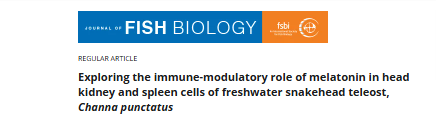
By Dr. Sheena Farheen Khan Assistant Professor, Department of Zoology, LCIT College of Commerce and Science, Bodri, Bilaspur, C.G. Title: Exploring the Immune Modulatory Role of Melatonin in Head Kidney and Spleen Cells of Freshwater Snakehead Teleost, Channa punctatus Journal: Journal of Fish Biology. This study examines the role of melatonin in regulating the immune responses of the freshwater fish Channa punctatus. In vitro experiments demonstrated that melatonin boosts vital immune functions, including phagocytic activity, superoxide production, nitric oxide generation and lymphocyte proliferation in spleen and head kidney cells. The use of the melatonin receptor antagonist, Luzindole and the Adenylate Cyclase inhibitor, SQ 22536 confirm that melatonin exerts its immune-stimulatory properties through receptor-mediated mechanisms involving the cAMP signaling pathway. These findings highlight the potential of melatonin as an important immune-modulator that may improve disease resistance in fish.
news
news
Navbharat news
news
news
news
Exploring the Immune Modulatory Role of Melatonin in Head Kidney and Spleen Cells of Freshwater Snakehead Teleost, Channa punctatus
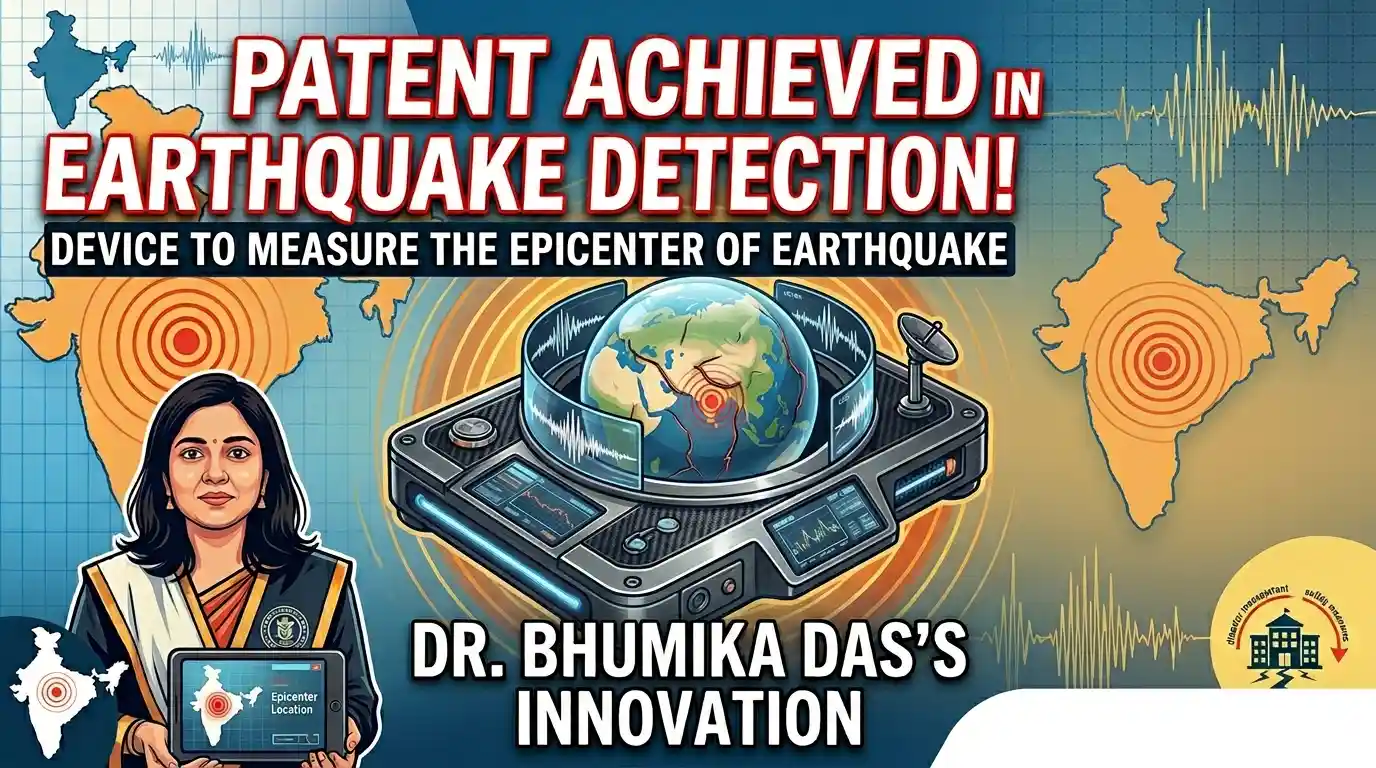
Patent Achievement in Earthquake Detection
Our institution is happy to say that we have successfully registered a design patent called “Device to Measure the Epicenter of Earthquake.” Dr. Bhumika Das, one of our faculty members registered it with Design No. 374517-001 On 23 November 2022. This innovation helps to find the epicenters of earthquakes. The device will help us to manage disasters better and take safety measures. The Government of India gave us the patent on 2 February 2023. This shows that we are committed to research, innovation and making a difference in society through our work on earthquake detection.
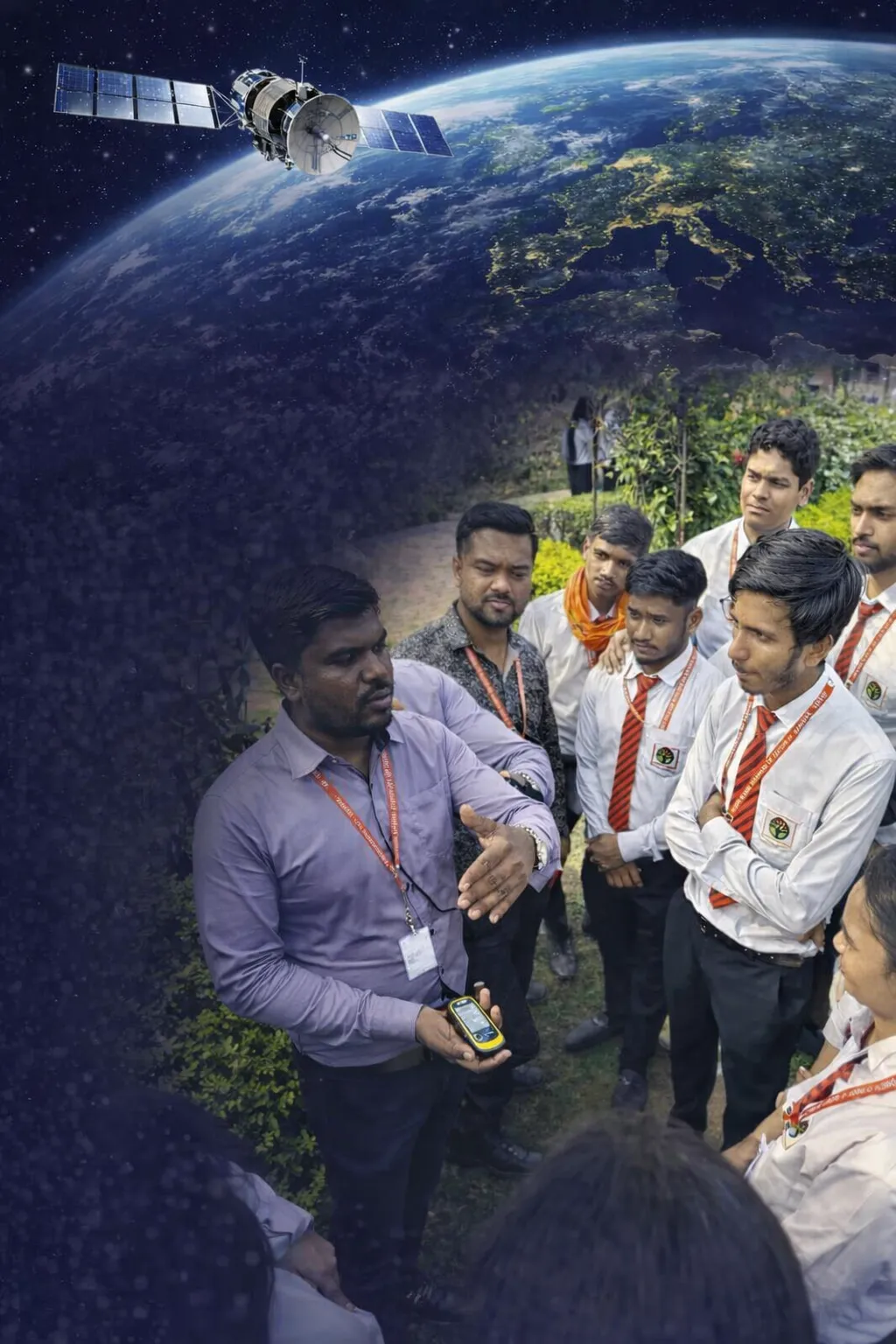
Understanding GPS
By Dr. Bhumika Das How It Guides Our World The Global Positioning System (GPS) is a satellite-based navigation technology that helps us determine our exact location anywhere on Earth. Originally developed for military purposes, GPS is now widely used in everyday life through smartphones, vehicles, and various digital applications. GPS works through a network of satellites orbiting the Earth. These satellites send signals to GPS-enabled devices, which calculate location based on the time it takes for signals to travel. This allows users to get accurate information about their position, speed, and direction. Today, GPS plays a crucial role in navigation, transportation, disaster management, agriculture, and even fitness tracking. Whether you’re finding the fastest route, tracking deliveries, or locating nearby services, GPS has become an essential tool in modern living. In a rapidly advancing digital world, GPS continues to improve accuracy and efficiency, making our lives safer, smarter, and more connected.
