Machine learning (ML) is a branch of artificial intelligence that enables systems to learn from data and improve performance without explicit programming. Instead of writing rules manually, we train models to identify patterns and make decisions.
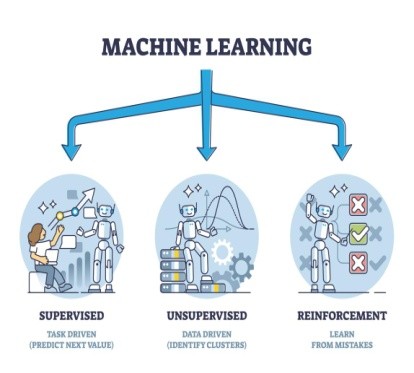
There are three main types:
- Supervised learning: learns from labeled data (e.g., spam detection)
- Unsupervised learning: finds hidden patterns (e.g., clustering)
- Reinforcement learning: learns through rewards and penalties
A typical ML process includes data collection, preprocessing, model training, and evaluation. The biggest mistake beginners make is focusing too much on models and ignoring data quality—poor data leads to poor results.
Machine learning is widely used in healthcare, finance, recommendation systems, and automation. However, it is not a perfect solution—models can be biased, require large datasets, and often fail in real-world conditions.
Machine learning is powerful, but only when applied carefully with good data, proper validation, and realistic expectations.
