By Anvesh Pandey
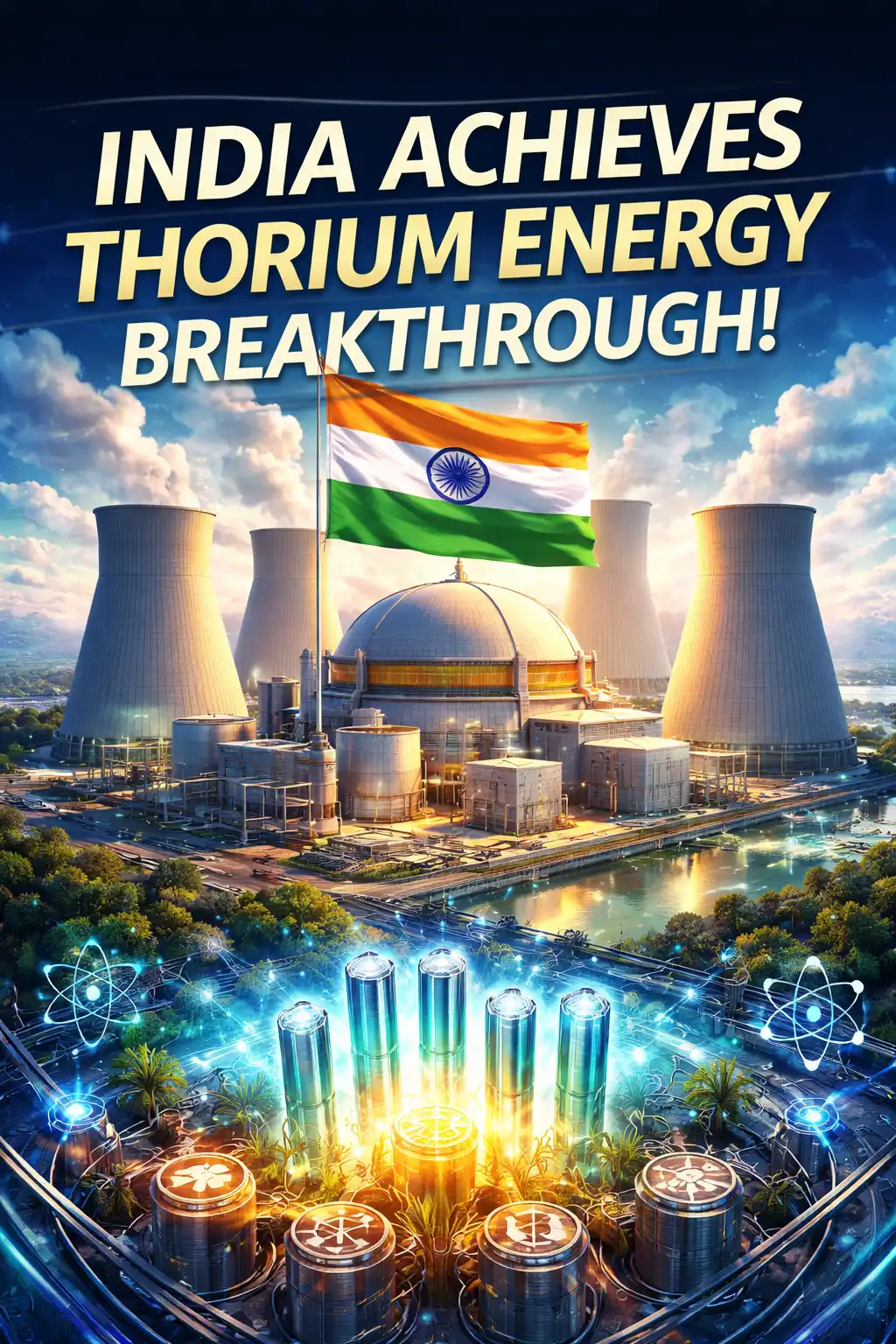
India is currently making serious progress in its long-term nuclear energy plan, especially in converting thorium into usable fuels like uranium-233 and plutonium. This idea was originally developed by Homi.J.Bhabha, who understood that India does not have large uranium reserves but has one of the biggest thorium deposits in the world. So instead of depending on imports, India designed a three-stage nuclear program. In the first stage, uranium is used to produce plutonium. In the second stage, this plutonium is used in fast breeder reactors to generate more fuel and also convert thorium into uranium-233. Recently, India achieved a major milestone when its Prototype Fast Breeder Reactor reached criticality, showing that the second stage is becoming successful. The final stage will mainly use thorium-based reactors, where uranium-233 becomes the main fuel, making the system almost self-sustaining. If India fully reaches stage three, it is estimated that the country could produce energy for around 200 to 300 years using its thorium reserves. This will be extremely useful for the future because it can reduce dependence on fossil fuels, lower pollution, and provide long-term energy security. It can also make India more self-reliant and stable in terms of energy needs, especially as the population and electricity demand continue to grow.
